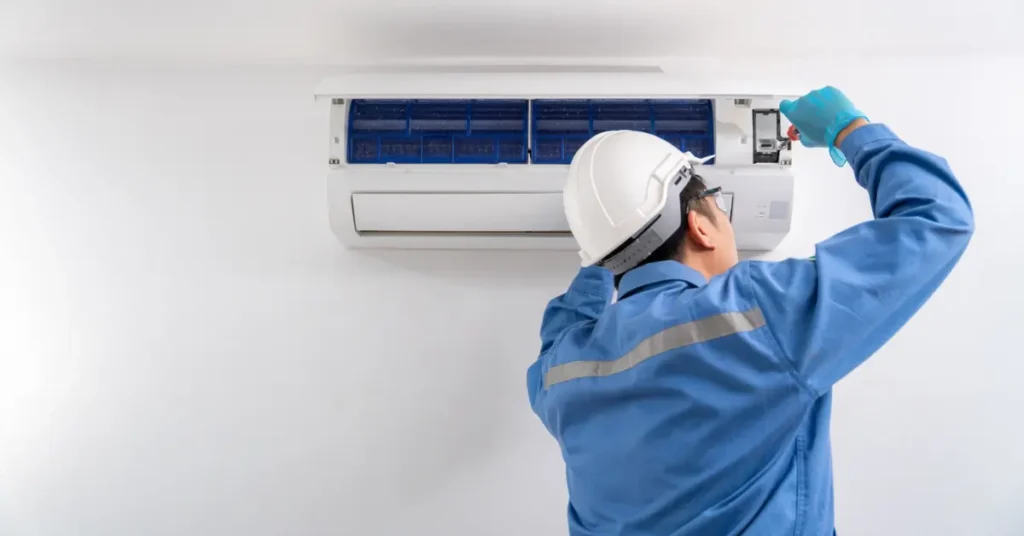
Read why We Check Airflow First
When your AC is running but the house still feels warm, it is natural to think something major is wrong. Maybe the system is low on refrigerant. Maybe the compressor is failing. Maybe the whole unit needs to be replaced.
But in our experience, that is not where we start.
At All-In-One Home Services, we follow a simple HVAC rule: Air Before Charge. In other words, before assuming your AC needs refrigerant, we check whether the system is moving enough air. Most cooling problems we see come back to airflow: a dirty filter, dirty coil, blocked outdoor condenser, dirty furnace cabinet, weak blower, blocked vents, or ductwork that is not moving air properly.
So if your AC is not cooling the house, the first question is not always, “Is the refrigerant low?” It is often, “Can the system breathe?”
Below, we will walk through the most common reasons your AC may be running but not cooling, what you can safely check yourself, and when it is time to call All-In-One for AC repair in Denver.
Why Your AC Is Running But Not Cooling
Your air conditioner has to do more than turn on. It has to pull warm air from your home, move that air across the indoor coil, remove heat, push cooled air back through your ductwork, and release heat outside through the condenser.
If airflow is restricted anywhere in that process, your AC may run for hours without cooling your home the way it should.
That is why a home can feel warm even when:
- The thermostat says the AC is on
- Air is coming from the vents
- The outdoor unit is running
- The system sounds normal
The problem may still be that not enough air is moving through the system.
Start With Airflow Before Assuming Refrigerant
Low refrigerant can cause cooling problems, but it should not be the first assumption. Refrigerant work should always be handled by a trained HVAC technician, and low refrigerant usually means there may be a leak that needs proper diagnosis.
In many cases, the issue looks like a refrigerant problem but is actually an airflow problem.
A dirty filter, dirty indoor coil, blocked condenser, or ductwork restriction can cause weak cooling, long run times, frozen coils, and warm air from the vents. That is why we check airflow first.
This approach matters because it helps avoid guessing. Instead of jumping straight to the most expensive possibility, we look at the basics that commonly cause an AC not to cool the house.
Common Reasons Your AC Is Not Cooling the House
Dirty air filter
A dirty furnace air filter is one of the most common reasons an AC stops cooling properly. When the filter fills with dust, pet hair, and debris, the system cannot pull enough air through.
That can lead to weak airflow, longer run times, higher energy bills, frozen coils, and rooms that never feel comfortable.
Check your filter first. If it looks dirty or clogged, replace it. Many homes need a new filter every one to three months, depending on the filter type, pets, dust, and how often the AC runs.
Dirty indoor coil or blower area
Even with a clean filter, dirt can build up inside the system. A dirty indoor coil, furnace cabinet, or blower area can restrict airflow and reduce cooling performance.
When the indoor coil cannot get enough air across it, the system may struggle to remove heat. In some cases, the coil can even freeze.
If your AC has weak airflow, runs constantly, or freezes more than once, it is time to have the system inspected by a professional.
Dirty outdoor condenser
Your outdoor condenser releases heat from your home. If it is covered in dirt, grass clippings, leaves, or debris, it cannot release that heat efficiently.
This is especially common in Denver during spring and early summer because cottonwood seeds can cover the outdoor unit. When cottonwood buildup blocks the condenser, your AC may keep running but fail to cool the house.
If the outdoor unit looks dirty, turn the AC off at the breaker first. Then gently rinse the outside of the unit with a garden hose. Do not use a pressure washer, do not open the unit, and do not touch electrical components.
Blocked vents or ductwork issues
Sometimes the AC is cooling, but the air is not reaching the rooms that need it.
Check that supply and return vents are open and not blocked by furniture, rugs, curtains, or boxes. If some rooms are comfortable while others stay hot, the issue may be ductwork.
Older Denver homes can be especially prone to ductwork problems. Ducts may be undersized, leaky, disconnected, poorly insulated, or not balanced correctly. In that case, AC repair alone may not solve the comfort issue. The real fix may involve ductwork, airflow balancing, or ventilation improvements.
Thermostat or breaker problem
Before assuming the AC is broken, check the thermostat. Make sure it is set to Cool, not just Fan, and that the temperature setting is lower than the current indoor temperature.
Also check the AC breaker in the main electrical panel. If it has tripped, you can reset it once. If it trips again, stop resetting it and call a technician. Repeated breaker trips can point to an electrical issue.
Electrical issue or frozen coil
Electrical problems can cause the outdoor unit, blower, fan motor, capacitor, or other components to stop working correctly. If the system hums, clicks, starts and stops, or the outdoor unit does not run, it should be inspected by a professional.
A frozen coil is another sign that something is wrong. If you see ice or notice very weak airflow, turn the system off and let it thaw. If it freezes again, call for service. Repeated freezing can damage the system and create water problems as the ice melts.
Denver AC Problems: Cottonwood and Older Ductwork
Denver homes have a few cooling issues we see often.
First, cottonwood seeds can collect around outdoor AC units and restrict airflow through the condenser. This can make the system work harder and cool less effectively.
Second, older homes may have ductwork that was not designed for modern cooling needs. Even if the AC unit is working, poor duct design or duct leaks can keep certain rooms from cooling properly.
If your upstairs rooms stay hot, airflow feels weak, or the AC runs all day without reaching the thermostat setting, the problem may not be just the AC unit. It may be the way air is moving through the home.
What Homeowners Can Check Before Calling
Before calling for AC repair, you can safely check a few basic things:
- Make sure the thermostat is set to Cool
- Replace or inspect the furnace air filter
- Check the AC breaker in the main electrical panel
- Make sure vents and returns are open
- Look at the outdoor condenser for dirt, leaves, or cottonwood
- Clear debris around the outdoor unit
- Gently rinse the outside of the condenser after turning power off
These simple checks may solve the problem or help you explain the symptoms when you call for service.
What You Should Not Try Yourself
Some AC problems are not safe for DIY repairs.
Do not try to handle refrigerant. Do not open high-voltage electrical components. Do not keep resetting a breaker that trips repeatedly. Do not keep running the system if you smell something electrical burning.
If the outdoor unit is smoking, treat it as urgent. Turn the system off if you can do so safely and call emergency services. If you smell an electrical burning odor inside the home, do the same.
Also, if someone in the home is elderly, disabled, has health concerns, or cannot safely troubleshoot the system during hot weather, call for help sooner rather than waiting.
When to Call All-In-One Home Services
Call All-In-One Home Services if your AC is still not cooling after basic checks, or if you notice any of these issues:
- Warm air from the vents
- Weak airflow throughout the house
- Frozen coil or ice on the system
- Outdoor unit not running
- Breaker keeps tripping
- Electrical burning smell
- Smoke from the outdoor unit
- Hot rooms or uneven cooling
- AC runs constantly but never reaches the set temperature
Depending on the issue, your home may need AC repair, an AC tune-up, ductwork service, airflow balancing, indoor air quality support, emergency AC service, or AC replacement.
The goal is not to guess. The goal is to find the real reason your AC is not cooling the house and recommend the right fix.
Conclusion
If your AC is running but not cooling your house, start with airflow. In our experience, airflow is often the first thing to check before assuming a refrigerant issue or major system failure.
A dirty filter, dirty coil, blocked outdoor condenser, cottonwood buildup, blocked vents, or ductwork problem can all keep your home from cooling properly.
Check the basics first: thermostat, filter, breaker, vents, and outdoor unit. If that does not solve the problem, or if you notice freezing, electrical issues, smoke, or burning smells, call All-In-One Home Services for professional AC service in Denver.
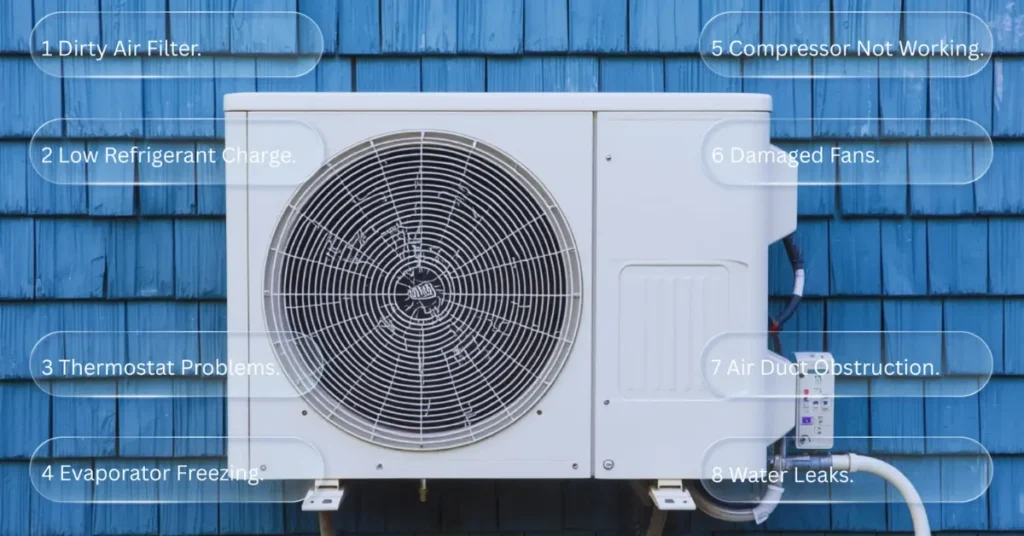
Need Help With an AC That Is Not Cooling?
If your AC is running but your house still feels warm, don’t guess at the problem. In our experience, airflow is often the first place to check but the right fix depends on what is happening inside your system.
All-In-One Home Services can inspect your AC, check airflow, look at the outdoor condenser, evaluate ductwork, and help you decide whether you need a repair, tune-up, airflow improvement, or replacement.
Call us today or schedule AC service online to get your home cooling again.
FAQs
Your AC may not be moving enough air. A dirty filter, blocked condenser, dirty coil, closed vents, or ductwork issue can all prevent the system from cooling properly.
Yes. A dirty filter restricts airflow, makes the system work harder, and can lead to weak cooling, frozen coils, and longer run times.
If the AC is frozen, making unusual noises, causing a burning smell, or blowing warm air after basic checks, turn it off and call a technician.
No. Low refrigerant can cause cooling issues, but airflow should usually be checked first. Refrigerant work should only be handled by a trained technician.
Yes. Cottonwood seeds can cover the outdoor condenser and block airflow, making it harder for the system to release heat.
Call if basic troubleshooting does not restore cooling, the breaker keeps tripping, the system freezes, airflow is weak, or you smell something electrical burning.